Christmas has passed (and for that matter so has summer and autumn. And the garden was beautiful this year) with all the usual hub-bub and manicness that the "Special Season" brings. In the midst of this madness I was hit by a random thought: Why the shepherds? This all came about on Christmas Eve as my youngest was dressed to go to the annual crib service. I, being the well organised Mum that I am, opted for the great last minute costume of dressing gown shepherd ("No dear, they didn't have Bart Simpson on them but I am sure God knows what you are meaning") with tea towels held on by a curtain sash cord ("No, you don't look silly with it on and I am sure somewhere in the Holy Land there was a shepherd with a green checked head covering"). Of course the youngest wanted to carry a light saber to ward off any Romans who would want to crucify Baby Jesus. That was met with a stern statement of notification to Father Christmas should such an implement make it into church.
As I sat and watched my children be amazed by the Angel Gabriel (and argue that her name was really Kristy and that Gabriel was a stupid name for a boy anyway) I started to wonder, "why the shepherds?" Overall, shepherds aren't big characters in the Biblical narrative. Yes, David was a shepherd at one point, as was Able for a short time and Joseph's brothers. The way the Old Testament deals with this occupation is rather similar to how we view fast food workers: a brief nod and let's get on to the politicians.
Putting things in a historical context led me to a brief troll on the net regarding life spans. Most of the articles confirmed what I already knew: People who were 30 years of age were a rare and wondrous thing. They were considered a blessing of the gods. Granted there were exceptions, as there usually are, such as Pharaoh Pepi II who lived for nearly 100 years, reigning 96 of them. Now Pepi had all the advantages that the wealthy and powerful had, The Shepherds did not. It is a well documented fact that the further down one is on the standard of living scale, then shorter your life expectancy is. This is as true today as it was 2000 years ago. So why the shepherds?
Shepherds are simple folk. They have the advantage of not being financially enslaved to religion. The birth of Jesus, now at the accepted time of 3BC, was during the Roman occupation of the Holy Lands. The Roman system of belief was complicated and expensive. It was more important to be seen "doing the right things" than "believing the right things." The Romans were generally tolerant of different religions providing these beliefs did not openly constitute a threat against imperial power. Rome was willing to work with the Hebrew state/religion so long as peace was maintained. The benefits of Roman occupation were well known as living standards and life styles improved due to trade and, ultimately, the security the Roman Army provided. To progress socially was to embrace all that Rome offered. This would cost money as well as ideals. The Shepherds were outside of this circle, therefore free to embrace their beliefs fully in what meager ways they had available. Still, why The Shepherds?
I am coming to idea that The Shepherds fell under the radar of Roman observation. They were poor -- but employed, therefore not really a threat as who would listen to them? They were not highly educated and therefore could be dismissed as 'incapable of understanding the complexities of life'. They were not in a powerful position so therefore anything they said would not cause political unrest. They could be, as we do to people in the same socio-economic position today, ignored. Therefore, when God The Father had his Angels and Arch-Angels announce the birth of His son, He used whispers rather than shouts.
Now you might counter this by pointing out that God put a whopping great star in the sky. True. And if we saw such a thing today we might think, "Wow! Isn't that pretty. I wonder why it is there." And that is about all we would do. Life would crowd in on us and by the end of the first week we probably wouldn't even notice it anymore. You see, somethings never change. And how do I know that my idea could be valid? When the Wise Men from the East appeared at Herod's court, Herod became worried and all Jerusalem with him (Matt. 2:1-3). The star was obviously well noted, yet the King, the Chief Priest, the Scribes and everyone who was anyone didn't get the meaning. Rich people wishing to give gifts to a child in Bethlehem could spell massive trouble with the Roman authorities from whom Herod got his power. Shepherds giving gifts, worship and adoration would never be noticed. For the second time, the Angels had to save the blessed ones from Earthly authority (Matt 2:12, 13).
Alright, if God whispered, then what about the Angels appearing and giving glory? That surely would have caused some noise. Probably, but then one might need to be in the right place at the right time. From the maps I have looked at regarding settlement area around Bethlehem, there are not a lot of people either now or then. Unlike the USA or Russia, or even, the UK, Israel and the West Bank are small. There is a patch of arable ground directly outside of the city to the east, but not much than 5 to 10 miles further in that direction and one would find oneself in the Wilderness of Judea. I'm not in good shape, but even I could do 5 miles in about 90 minutes. The Shepherds were in good shape and had to be just in order to survive. There is a bit of "wilderness/nomadic sheep farming" south of Bethlehem. This could be easier to walk from into Bethlehem.
However, how many of us actually hear what is happening on the other side of town, much less 5 miles away in the middle of the night? I live less than a half mile (as the crow flies) from a football ground. I can just hear when the local team has made a fantastic something and 10,000 people scream with joy. I am also not likely to hear much once I have gone bed. For the sake of the argument,from October to February the sun sets between 5 pm and 6 pm. Most people would be in their houses and probably sleeping by 9 pm as the sun rises at 6 am. As this was a pre-electrical, agrarian place where the lives of the inhabitants would be dominated by the sun, the only folks out at night would be those who had to be. That would include The Shepherds.
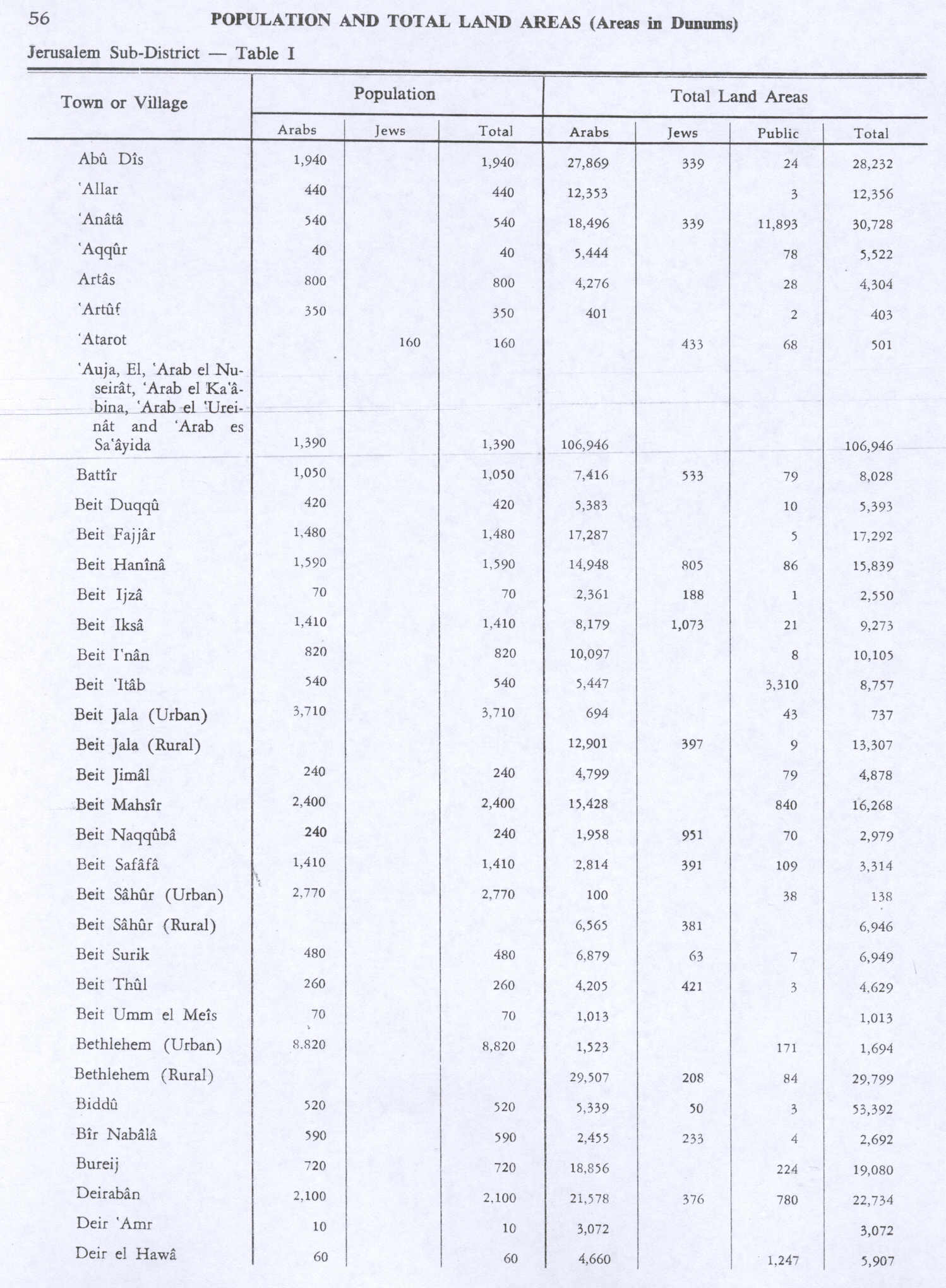
The last thing to think about here is the topography and population. Even in the time of Herod I Bethlehem was considered a bit of a back water. A 1945 Census shows the population at 8,820. The town had been sacked and rebuilt on numerous occasions as early as 529 AD. There is even an archaeologist who says that there is no evidence that the area of Bethlehem was even populated at the time of Jesus' birth. (Aviram Oshri, "Where was Jesus Born?", Archaeology, Volume 58 Number 6, November/December 2005.) I do find this to be a bit hard to believe, but I do accept that Bethlehem, for all the importance now attributed to her, was tiny. I would think somewhere in the order of 100 people. If Herod I did slaughter the innocents, it would have been of a very small number and with a mind toward causing fear of him rather than any serious attempt to murder a Messiah. Even if a whole town of 100 saw the Angels singing, that is only the start to a whisper campaign.
Not forgetting the lay of the land, populations may grow but the land doesn't change that much when it is rugged terrain. The land surrounding Bethlehem hasn't changed that much in two millennium. We are told in the Bible that people grazed sheep there and we see the same thing today. This is sheep grazing land and not good for arable farming except in small strips. Hills may have blocked the view of those folk who may have been up so late at night on that first Christmas.
So why the Shepherds? They were perfectly placed to pass on the message. They could tell their families and friends the wondrous things they had seen and would, possibly, be taken seriously. They could help "prepare the way". They could continue to tell the tale each year with virtual impunity. Many would have listen and believed. John the Baptist was one of many preachers of the time. During the lifetime of Jesus, several movements began, each calling for an apocalyptic and messianic end to Roman rule arose. Those shepherds may have been a part of this or certainly would have had more intimate knowledge of the Almighty's plan. What is interesting is that when Jesus began His ministry, he did not have to wait long or work hard for followers. The way had been very prepared. I think this was partly due to John and The Shepherds.
I think it is amazing that the Father Of All, God of the Universe, regularly choses to do HIS work in a small and quiet way. As life is becoming even more noisy for us, it is important to remember that we listen and we hear. We are so used to the spectacular as normal that we miss the miraculous in the reality. That is not to say that The Creator can't do big when he wants to. The stars prove that. HE just likes to work in the nitty-gritty of life where it is even more important to us.
So HE chose The Shepherds. And I believe they helped pave the way. And when Jesus reached maturity, He still chose the simple, common people to touch. The people who sought peace and hope. People like us.
Perhaps the message to us about them is to be a shepherd and not a king.


Subscribe to:
Post Comments (Atom)
No comments:
Post a Comment